Heartbroken Desert Daze
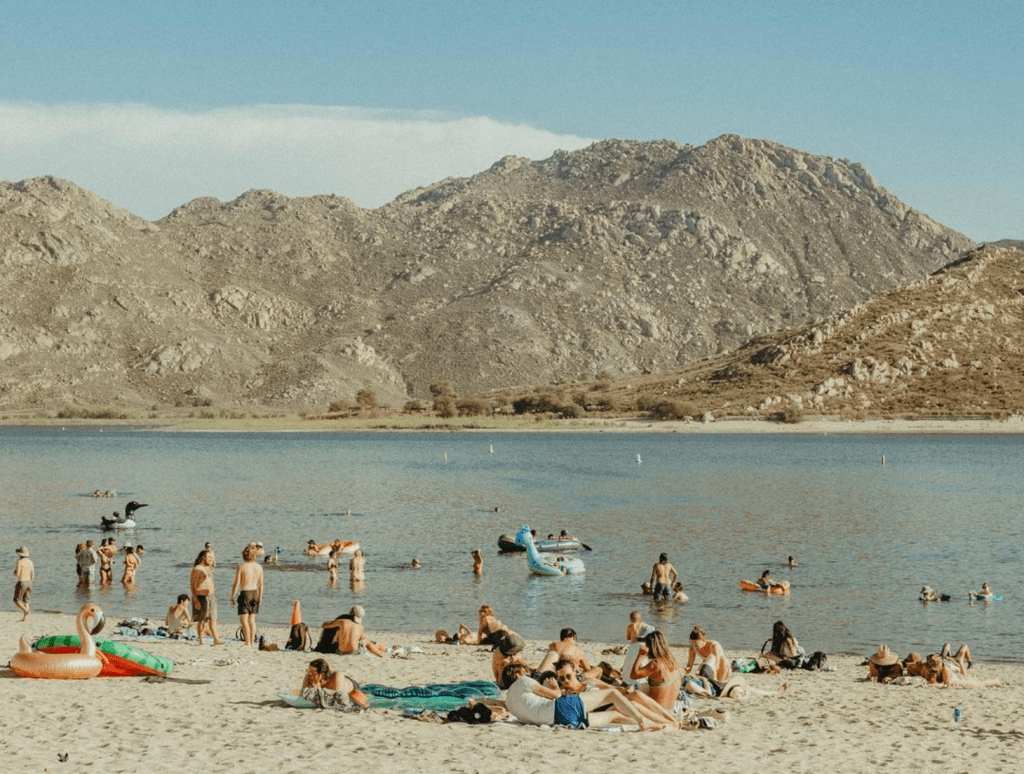
When you put Thundercat, Cigarettes After Sex, and De La Soul as headliners for a gorgeous music festival on a desert lake eclipsed by crumbling mountains, you’re going to draw some buzz. But when the rug gets pulled out, and our tickets are refunded with an apology, we fans are left wondering, what is going on with the world?
The folks from Desert Daze posted an announcement that their festival slated for October 10-13, would be canceled. In their post, they discuss the pressure of operating as an independent festival, the rising costs of productions, and the volatile market of festival attendees.
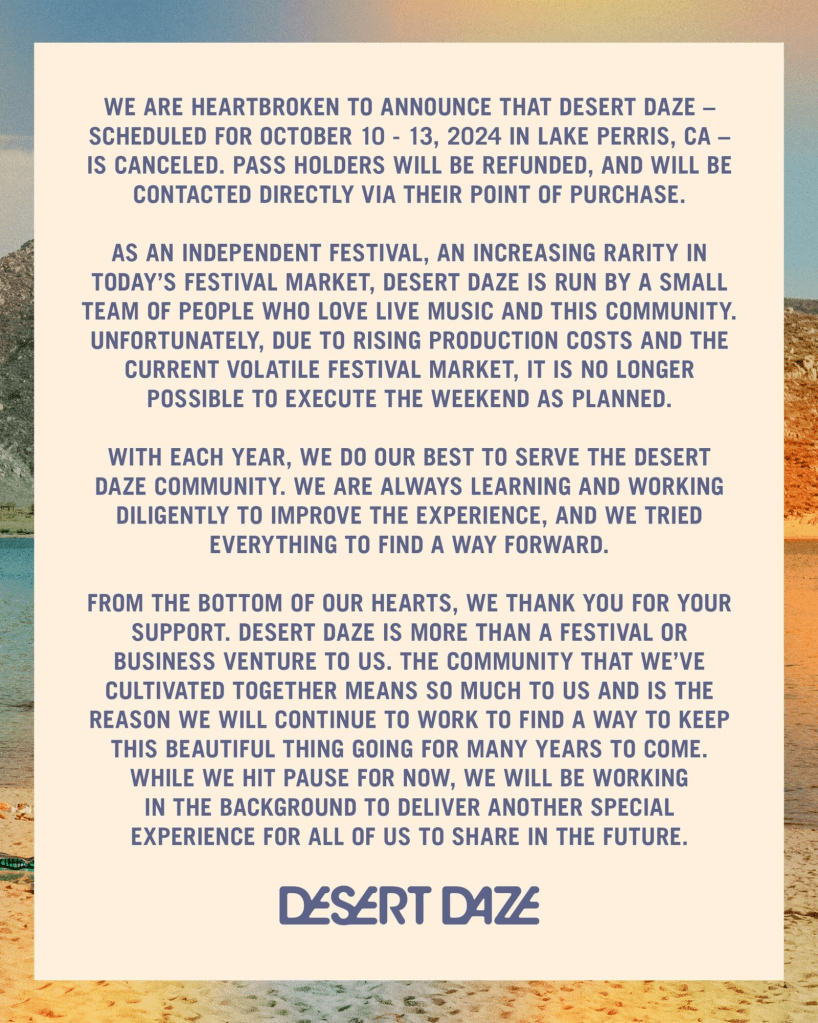
“As an independent festival, an increasing rarity in today’s festival market, Desert Daze is run by a small team of people who love live music and this community.”
– Desert Daze
The Greater Landscape
This psychedelic rock and indie electronica festival is just a piece of the puzzle when it comes to looking at greater trends in live music. Many festivals that are larger and more well known have canceled this year as well. Electric Zoo in New York City, Lucidity in Santa Barbara, as well as the Life is Beautiful Festival in Las Vegas, have all canceled due to the aforementioned reasons. Other festivals have announced that this will be their final years.
When you zoom out further you can see this trend in the large festivals that set the bar. Coachella is the highest grossing and most attended festival in America. Normally, tickets for Weekend One sell out in just a few hours, but this year it took months to sell out. And between both weekends they only sold roughly 80% of their 250,000 available tickets.
Lollapalooza, Austin City Limits, and Electric Forest also took more time to sell out. It appears that after an initial post-pandemic resurgence of live events, that the boom was short lived; and in 2024, across the board, the Coachella was down 14-17% in ticket sales. If these big dogs are struggling to sell tickets, it makes sense that the smaller independent festivals might also be having troubles. In an interview with Billbaord agent, a talent agent believe the culprit could, in part, be to the incentives that are no longer out there for big stars with drawing crowds.
“The issue for every festival now is that dynamic pricing is so good and prevalent that any artist big enough to headline a festival is more motivated to just headline their own shows,” headlining a festival then becomes less of a financial decision, and more of a choice for those “who are on their way up and need to make a statement.”
-Billboard Interview with Anonymous Agent
The Case for the Festival
Looking ahead it’s impossible to predict where things are headed. Perhaps the boom of festivals was a pure invention and desire of the millennial generation. As they start families and age out of the market, they are not being replaced by their zoomer counterparts. Perhaps the inflation of the economy is squeezing out the fans from a price perspective. Perhaps the musicians aren’t being compensated.
But, when you think about it, festivals can actually save an attendee lots of money in the long run. With individual concerts becoming more and more expensive, it is actually more cost effective to attend a $500 dollar festival, and see dozens of shows in a single day. This also opens one up to artists who you might not see on your own.

For all these reasons (plus the sheer bliss of dancing in the desert), we hope that Desert Daze is able to return to the scene in 2025.

 The Indy Review