David M Rangel. /. February 18, 2026. / Reviews
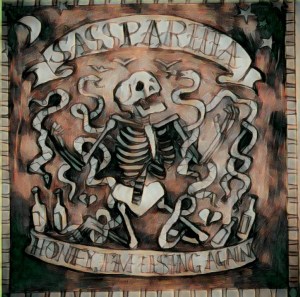
Kevin Blackwell is an American storyteller who spins musical yarns of a very honest, unique kind. As the singer and leader of Sassparilla, a Portland/Colorado-based Americana/blues/backwoods cabin-style band, he’s taken all of the 15 songs on Honey, I’m Using Again and stripped them down to their barest essentials with sometimes catchy and sometimes haunting results. But, all create a very specific mood in the vein of the best southern gothic authors and obscure, old time country and bluesmen.
Calling Sassparilla “alt-country” would be a convenient, but lazy label of a band that digs deep into the roots of American musical styles. While saying the band should be mentioned and stand alongside leaders in that genre including Uncle Tupelo, Drive-By Truckers, Whiskeytown and others would be a fair statement, Sassparilla often move even further into blues, dark Americana, gospel and even Celtic vibes. The raw, gritty, desperate-sounding lyrics of people in various crisis often belie the primarily upbeat punkish, often danceable banjo/fiddle – centric music that contains a whole lot of soul.
“When I Get Off this Mountain” gets things started with a rolling, mainstream-friendly sounding style of Americana that wouldn’t be out of place in some backwoods Netflix drama. It’s one of a few songs on the record that touches upon the existential dread of imminent death. Blackwell makes some hard confessions regarding controlling his own mortality and concluding this life on his own terms. The track is authentic sounding enough to appeal to purists, while still being, arguably, the most commercially-appealing song on a record that contains its share of folk-pop leanings.

Sounds of sinister goings-on in a swampy Louisiana bayou-like setting bring forth vocal inflections reminiscent of Blind Willie Johnson contemplating a hard life on “One Morning”. It’s a common thread that runs through the album, as if languishing in the honesty of loneliness and pain is actually cathartic and hopeful. And the richness of heartfelt words and well chosen symbolism keep the necessity of musical instruments to a minimum. Lack of percussion is particularly notable. And when it is present, it’s the drumming of Blackwell’s 13-year-old son, Emmett, who holds his own well and contributes on an adult level.
The lo-fi feel of this record suits the prose-style lyrics in a way that slicker production would lack. The heavy-handed examination of the human condition and the pain of living could only be brought out in meticulous lyrical detail, with the most minimal production treatment, as Bruce Springsteen did on his revered lo-fi record, Nebraska. This sparseness puts the doom and gloom, front and center and into your mind.
But not everything is completely doom and gloom, here. There are a few anomalous tunes that bring in a bit of lightness to the proverbial “country problems“. “Maggie Mae” is a joyous, violin-laden Irish-style-sing-along about not much more than a woman who enjoys her share of the drink. The party-like tone might even inspire the listener to imbibe. One can almost hear the voice and inflections of the late Stuart Adamson of Big Country on “I’ll Be Damned”, a track that sounds like it replaced that band’s bagpipes with what sounds like a mandolin. “Eyes of Kathleen” is a lighthearted work of folk about a woman who seems to be lovable, but a handful. And “Songs With No Name” is an alt country/college music-style track where Blackwell sounds as if he is channeling his inner Tom Waits. These songs all bring a pleasant, lighter change of pace to the record. But it’s the dark, descriptive, lyrically-creepy songs, such as “Astoria” where Blackwell shines brightest as a singer and tale spinner.
Sassparilla shows that making truly thought provoking, atypical forms of musical art doesn’t require multitudes of expensive instruments and a big studio budget with a high paid producer. Their seemingly basic, but detailed tracks are examples of complex minimalism that appear straightforward, but are not actually easy to create, should one try to do it. Their vivid, dark lyrical photographs strike a perfect balance with the more listener friendly sounds of their instruments. Highly recommended for fans of rural, American musical styles, southern gothic literature and all-around good music.
The album is out everywhere tomorrow, February 20th.

 The Indy Review