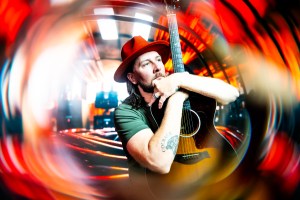
As frontman for Authority Zero, Jason DeVore has traveled the world the last 30 years, bringing powerful and confessional reggae and ska-infused punk rock to masses of fans. In between albums with that band, DeVore has used his free time to record music under his own name, using these solo projects as an outlet for exploring new musical inspirations and have recordings that are 100% him.
Going through a dark period and coming out the other side healthier, happier and sober, has provided much of the inspiration for his latest solo outing Til The Voice Goes Out. It’s a powerful collection of songs, with tracks that go from anthemic punk rock to vulnerable acoustic songs to explorations into orchestrated pop and even mariachi music.
With the release coming tomorrow, DeVore took some time to discuss the writing process of the new album and dive deeper into some of the songs with me.
**
Indy Review: First, thanks so much for speaking with me. I’ve been a fan for years, and just finally got to see you guys (Authority Zero) live opening for Unwritten Law at the Roxy back in 2023. Do you take any different approach when performing/planning a set-list for an opening set versus a headlining one?
Jason Devore: Very cool and thank you for that! We do have different approaches. If shorter we make sure we have our “hits/fan favorites” in there given limited time and headliners we have more room to toss in more abstract or newer songs.
IR: Your latest solo album, Til The Voice Goes Out, began with the recording of “Courage” with Kristen Taylor at Undergo Studios. I read you only had planned to do that one song, but things went so well you kept recording. Did you have other songs from your new album written already, or did those start coming out naturally in the studio?
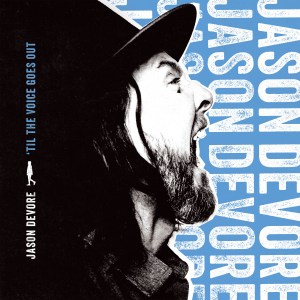
JD: That’s correct. When I started diving more into it I went through my old phone memos and realized just how many songs I did have strong starts to that i’d never finished. If anything else they were great kick off points to build from.
IR: What made you decide to go with a full album versus a handful of singles or an EP?
JD: It was time. I’m a big fan of full length albums. I love the idea of a full collection of songs that stands as a time stamp piece and tells a full story of that given times emotions and thoughts.
IR: You’ve said “This record is what I’ve longed for all three of my past records to be on a professional level”. Can you talk a bit more about this – Was it simply having more experience in the studio and a bigger contact list of collaborators that led to this improvement, or was it more a reflection of your personal growth (getting sober, having more patience/discipline) that led to the final results?
JD: All of the above. Getting sober changed everything and all in a positive way. Had that not happened I can honestly say I probably wouldn’t be in the situation I’m in now nor would this album have happened at this level. That goes for production and in general. Double Helix stepping in played a massive roll in all of this as well. They wanted me to have the ability to record the record I’d always wanted to on a professional level and I can confidently say I have.
IR: You’ve mentioned how this is your “healing” record, with half written at your lowest points and half written after you quit drinking and began your journey towards sobriety. Was there a significant sonic difference between the songs from each half, and was it a challenge to blend both halves together into a cohesive piece?
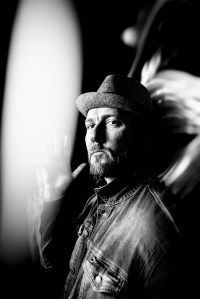
JD: I would say so for sure. Many of the more somber songs were written at my lower times of course and the higher energy one’s were more where I started feeling stronger both mentally and physically.
IR: Would you say this is your most autobiographical record?
JD: That’s difficult to say as all of them are very much that. This one is just an addition to the collective autobiography that all my records both band and solo have been a part of. This is just the most recent chapter.
IR: I love the first single “Turn it Off”, which you said was “about slowing down your mind and trying to turn off the constant mental infiltration of static, propaganda, indecision, and just all around clutter. The amount of confusion and frustration driving a constant anxiety that doesn’t allow you to feel nor think clearly.” Do you do any kind of work (meditation, mindfulness) to help with your own decluttering of your mind, and does it help with your songwriting? Or is songwriting what you do to clear your mind?
JD: I exercise daily and do mediation following each workout as well. That helps me immensely. With that, song writing and performing is my biggest stress reliever and mental decompression. Getting to get it all out on paper and off my mind by screaming and singing it out nightly to the point of exhaustion does wonders.
IR: You got Bob Hoag (The Ataris, The Format) to produce the record along with Kristen Taylor. What did each of them bring to the recording process, and how did their input shape the final record?
JD: It was such a pleasure working with both of them for different reasons. With Kristen and I it was more of a carefree type of thing and we would just throw anything and everything at the wall and see what stuck. A great deal of it did and then when everything moved over to Bob for mixing we started taking it to a whole other level which led to more creative production, process of elimination, and adding totally new experimental ideas, turning it into something completely different and unique. I like to say this album was just like life itself, it was born without a lot of knowledge or direction and by the time it was finished it had grown and developed through a whole lifetime of experiences into a mature being.
IR: Lyrically, I can definitely hear where in the narrative you are, with you often being brutally honest about how you used to act (Singing “What would you say if I told you that I don’t really care?” on “Don’t Poke the Bear”) and getting vulnerable on “Count Me In” (“I think it’s time to be honest with myself”). Was it difficult to go to these places and be so public with this self-examination?
JD: Not at all. It was freeing rather. I’d been deep inside myself in pain and thought both physically and mentally for a long time and getting it all out there and again being “honest with myself” and those around me, it was quite liberating. Some may judge, some may not, but I don’t really care because it’s my story to tell.
IR: Authority Zero has always mixed in various styles in their sound (Punk, reggae, ska, hardcore), but I felt you go even further here, incorporating mariachi (“I’m on a Beach”, “Bambino”), folk (“WAFU”), Ennio Morricone-style orchestration (“Lonely Soul”) and even a bit of operatic piano balladry on the title track. How much of this was experimentation, versus an original plan to step out of your comfort zone and bring in more influences?
JD: A lot of it was very pre-meditated. Sky was the limit with this album and with it not being and Authority album without that somewhat “expectation” sonically, I have had limitless ideas for the solo songs and sounds that I am always very excited to pursue. My influences span across the globe and it’s a great way to allow those to shine and not be suppressed to push musical boundaries, because in my mind, there aren’t any.
IR: One influence you’ve been open about is Jeff Buckley. Outside of doing your own take on Leonard Cohen’s “Hallelujah”, where else would you say Buckley’s influence can be heard on the album?
JD: Certainly throughout more of the “beautifully” sung moments. There’s a great deal of soul and intensity that shone through Buckley’s music that I feel flows within these songs as a whole.
IR: Once the record is out, are you planning to tour behind it? Any songs you foresee being a challenge to recreate on stage?
JD: I definitely am going to tour on it as much as possible. It’s a very busy touring year for Authority Zero with it being out 30 Year anniversary, but I’ll be hitting the road with my acoustic for spurts in between. As far as recreating the songs live on stage, they’ll all have the same heart and vibe to them, but just the stripped down version in more cases than not. My plan is to build a band around them to help give the full experience toward the end of the year when time permits.
IR: Emotionally speaking, will any of the tracks written during that darker part of your life be hard for you to play live?
JD: Those are actually the songs I’ve embraced most and have enjoyed performing. That may be in part due to them being some of the more stripped down songs as well.
IR: Despite writing parts of this record during a dark time, there’s a lot of hopeful and uplifting moments throughout, with you singing “let’s celebrate tonight because it’s a goddamn good day to be alive” on the title track. Do you find listening to those songs, and possibly singing them in a live setting, continues to help you in your sobriety and keeping yourself in a good mental space?
JD: Absolutely. I’ve always been one to write of life’s hardships no matter how hard and always at the same time look at the bright side of things. The light at the end of the tunnel if you will.
IR: Looking at these songs, is there any one in particular that stands out as something you never thought you would be able to write ten or even five years ago?
JD: Certainly! A great deal of life has happened since then and I’ve grown and opened up a lot through them.
IR: Moving forward, is there anything you learned from writing this album that you’re excited to incorporate into future Authority Zero music?
JD: Yes…everything possible.
**
Til The Voice Goes Out comes out tomorrow, June 7th, on Double Helix Records. You can listen to the first two singles here!


2 Comments