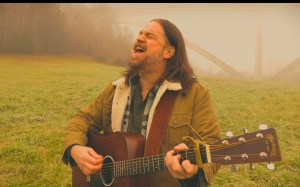
Nashville musician and songwriter Matt Burke describes his brand of music as “struggle country”. His songs push for raw, unflinching storytelling and honesty about times when you need to push forward while life is pushing back. Burke himself has suffered from the burnout of the creative journey, taking time away from music, only to come back reinvigorated with the single “Coming Down the Mountain“.
Burke took some time to discuss the journey of writing the song with us, and what the new year has in store for him.
**
THE INDY REVIEW: For those people just discovering you, how did you get started in music and what/who were some of your earliest inspirations?
Matt Burke: I’ve been doing this for a long time – toured nationally independently for years before moving to Nashville in a converted Dodge Caravan. Early on, it was the storytellers that got me – guys who weren’t afraid to tell the truth about what it actually costs to do this. Chris Stapleton‘s raw vocal delivery, the honesty in Jason Isbell‘s writing, the way Sturgill Simpson just said “fuck the industry, I’m doing it my way.” But really, my biggest inspiration is just the life I’m living – cost of living keeps going up, it’s harder and harder to get by, people are working multiple jobs just to keep going. That’s the world I’m writing about.
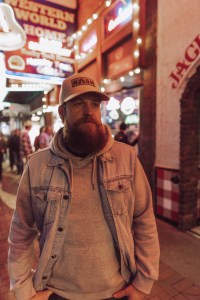
IR: You’ve said your song “Coming Down the Mountain” “captures a white-knuckle drive down Monteagle Mountain in a midnight rainstorm” – it sounds like this was a real experience for you? When did it click for you that there was a song in that story?
MB: Yeah, that actually happened. I was making regular trips between Florida, Nashville, and Chicago – bouncing between gigs, life, family – and I kept going through those Monteagle passes. Early on, before I was comfortable with that drive, I got caught in this perfect storm of conditions: dark, stormy night, temperatures in the 40s so I’m thinking about black ice, there’d been accidents, traffic was jammed up. I’m sitting there white-knuckling it through all that chaos, and right in the middle of it, the song idea hit me. That feeling – can’t see where you’re going, can’t stop, just gotta hold on and hope you make it through. The metaphor wrote itself.
IR: The song was your first track after months away due to ‘creative burnout’. Can you talk more about when you realized you had burned yourself out, and how you recovered from it to come back with this song?
MB: I realized I was burned out when I released “Tennessee Straight” in September and just… didn’t have anything in the tank to promote it. Couldn’t jump through the social media hoops, couldn’t put the ads together – it all felt phony. I’d spent all of 2025 putting out monthly singles, making videos, working til 2 AM on content, dumping money into Facebook ads – and I was getting a couple hundred views unless I paid for more. Meanwhile, I’m watching 15-year-olds game the algorithm and get a million followers and I’m wondering what game I’m even playing. I didn’t sign up to be a social media influencer – I signed up to be a songwriter.
I didn’t really “recover” in some clean way. I just hit a point in December where I decided to record and put out “Coming Down the Mountain” because it started to feel like a really good metaphor for what I was going through – choosing to keep going when you can’t see where you’re headed. The song IS the burnout. It’s not a recovery story – it’s a survival story.
IR: You’ve also mentioned how the track represents the struggles of choosing independence as an artist over safety. When in your career did you decide that independence was the right track for you? Have you felt that it’s rewarded you more than a safer track?
MB: I played the safe route – went to college, got a degree, ended up with a bunch of student loan debt only to end up playing music and working the gig economy for a living. I could probably get a corporate job tomorrow, get health benefits, make more money, be more comfortable – but I tried that outta college for a while and I couldn’t stand it.
When did I decide to go independent full time? Honestly, it’s less that I “decided” and more that I just can’t stop. Independence isn’t the “right track” in any practical sense – it’s harder, less stable, financially stupid. But it’s the only track where I get to build life on my own terms, say what I actually mean, and not compromise the music for someone else’s agenda.
Has it rewarded me? In some ways, yeah – I really enjoy how I get to spend my time. My days are on my own schedule. I don’t have to work for some asshole telling me how to do things. In another sense, I kind of hoped things would be further along by now. But I’ve seen real growth – Spotify listeners connecting with the music, a SPIN Magazine feature, people who actually get what I’m trying to say. That matters. Ask me again when I’m 60 – I might have a different answer.
IR: When sitting down to write “Coming Down the Mountain”, did you already have a melody or general arrangement in your head? How did the song evolve?
MB: I got the fingerpicking pattern first, and then the vocal melody came on top of that. The first line I thought of was the first line of the song, and it’s very low – towards the bottom of my register. As I wrote it and the song progressed, I realized I wanted to eventually make the jump a full octave by the end so that the final choruses could be big and emotional.
When my producer Jason Bobo and I sat down to work on it, we basically approached it as one long crescendo. It starts very simple, very stripped down, very raw, very low vocal – and it builds to this big crashing crescendo at the bridge and final chorus. I think either consciously or subconsciously, the idea of a truck running away down a mountain pass shaped the feel of the song.
IR: How long did it take from starting the song until you had the finished track? Were there any hurdles you had to overcome when writing it?
MB: The writing itself came pretty quick once I had the metaphor – maybe a few sessions. Production took longer because we wanted to get the atmosphere right. The biggest hurdle was honestly just making myself come back and finish it after being dark for months. There’s a vulnerability in releasing music after you’ve publicly burned out. You’re basically saying “I know this might not work, but I’m doing it anyway.” That’s hard to put out there.
IR: What does 2026 have in store for you?
MB: I’m making a fundamental shift away from the one-single-one-music-video-every-month thing, because honestly that didn’t really do anything for me. What I’ve always wanted to do is make albums – I was inspired early on by artists like Pink Floyd and The Beatles who made pieces of art that made sense from beginning to end. When I moved to Nashville, the standard operating procedure and advice you got from everybody was to put singles out on a consistent basis. But that’s what everybody’s doing.
At this point, I have a bunch of songs together that I think make a lot of sense as an Americana, folky, less-produced kind of thing, and I’m really excited to put that out sometime in the spring. In addition to that, Danielle and I are planning on recording a new acoustic album as a follow-up to Hookups & Heartaches, which came out two years ago.
I’m also getting my catalog in order to start working with a sync company and try to get some of my music into TV and film.
Honestly, outside of that, I’m just trying to figure out how to be the most authentic version of myself and write the realest songs so I can connect with people who are dealing with the same shit I’m dealing with. The game feels rigged – cost of living keeps going up, you’re working harder just to stay in place, everything’s stacked against you. But you keep going anyway. That’s what I’m writing about – not some corny perseverance story, but more like a middle finger to a world that’s trying to grind you down. Showing you’re tougher than whatever life throws at you.
**
If you can’t relate to all of that above, I’m envious of you. Find catharsis and camaraderie in your own struggles listening to Matt Burke‘s “Coming Down the Mountain” in our A Single Sit-Down Playlist.

 The Indy Review