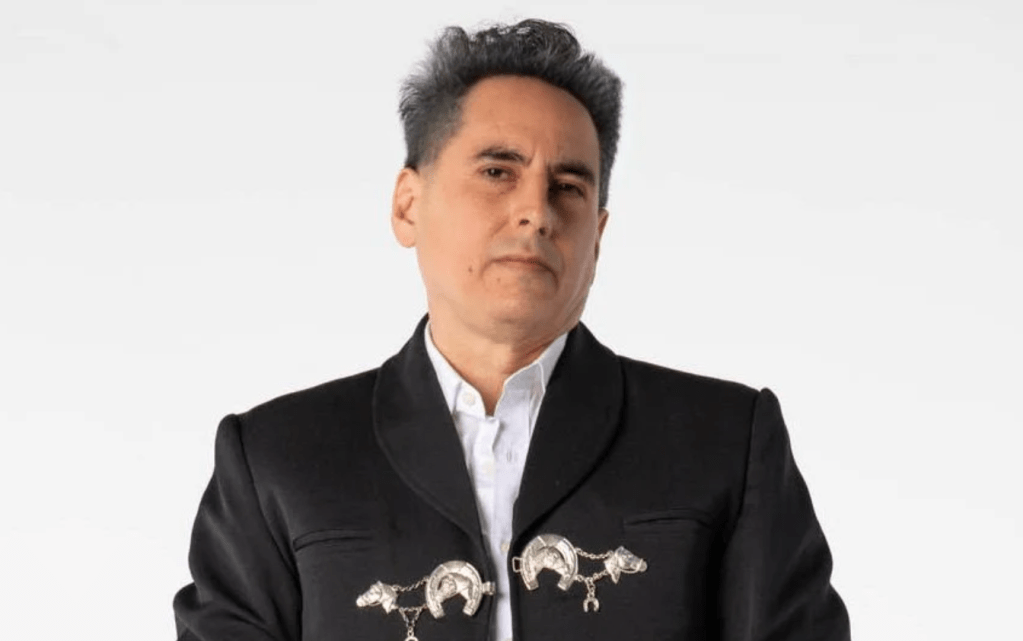
David M Rangel / April 11, 2026 / Interview
A few weeks ago, I reviewed Portland rocker Joshua Josué’s new record, Broadcast to the Surf Ballroom. With this ambitious recording he not only re-recorded songs by the late Buddy Holly and Ritchie Valens, he took on the painstaking task of dissecting and adding verses and arrangements to a number of unreleased songs from those artists. He did so in a way he thought they might have done themselves, had they not passed away in a place crash in 1959. The resulting album is a reimagined homage to the artists, that has been gaining traction with fans and surviving family members and friends. I sat down with Josue’ to talk a bit about the making of the record.
**
Indy Review: Thanks for being here, Joshua. Let’s start out with the basics. Can you tell me a bit about your earliest history with Buddy Holly and Ritchie Valens?
JJ: Yeah, so Ritchie Valens is the reason I started playing music. I was a kid and saw the music video for “La Bamba”. The song blew me away, and seeing Mexican-American dudes rocking out on the screen was pretty influential. So when I saw the movie, La Bamba, I was super inspired by it. When I got out of the movie, I had 100 bucks saved so I went and bought a secondhand guitar and started learning Ritchie Valens’ songs. I learned to play guitar just by practicing Ritchie Valens and Buddy Holly songs. That was the starting point of music for me.
Indy Review: So, besides hearing the songs and being a super fan, is there anything else that led you to taking on this particular project of expanding on their unreleased songs?
JJ: I think part of it was always being a Buddy Holly fan and a Ritchie Valens fan, I listened to some of the demos that were made. Norman Petty, Buddy Holly‘s producer, posthumously released some of the songs and he added instrumentation to them. I always thought that was a little disrespectful to Buddy Holly, because I don’t think it sounded like something Buddy Holly would have done. I was always grateful I could hear some of those tunes, but I thought it was pretty disrespectful the way he added some of the backing vocals that he did, extracting Buddy’s voice on these odd recordings. And somewhat similar is Ritchie Valens and his manager releasing songs that Ritchie didn’t ever want heard by the public. So for a lot of years, out of respect for Buddy and Ritchie, I wanted to make an honest and honorable recording of them in the most respectful way that I could do it to pay homage to them. That was one of the main catalysts for doing this. And also, my love for Ritchie Valens is huge. As I said, his music inspired me to start playing and somehow bring me closer to his music. It felt like something really special to do. And when I had an opportunity to do it, I jumped on it.
Indy Review: Can you talk about how you gained access to the Buddy Holly apartment tapes and Ritchie Valens demos? Did you reach out to the estate, or have a talk with the families?
JJ: To record the songs, I just had to reach out to the publishing companies to get the rights to do that. That wasn’t really too much of a problem. Really just paying some money and giving acknowledgment was the beginning and end of that. One of my biggest concerns, because I have so much respect for these artists, was how their family members and bandmates might feel about this. I did not have any way to contact those people. But once the recording was said and done, I actually became friends with Ritchie Valens‘ nephew, if you know Bob in the movie, La Bamba, it’s his son. And I ended up getting in contact with Ritchie’s high school girlfriend, Donna, who he had written that song about. And both of them really loved what I did with Ritchie’s songs. The album has made the rounds with Ritchie’s family, and I have the blessing from them that they are very happy with what I’ve done with this. So, I didn’t ask permission, but thankfully, now that we are on the other side of it, they’re cool with it. I put the record out with fingers crossed and hoped the family members would like it. I haven’t had any contact with the Buddy Holly crew, but Ritchie’s family has been very appreciative and supportive of the record. That’s just huge to me to have them say “cool” with it.
Indy Review: Wow. Getting the blessing of Ritchie’s girlfriend Donna, is a really major thing.
JJ: Yeah, it was really nice. She sent me a message saying that she had watched me play “La Bamba” on some YouTube videos and said it was really great and that it reminded her of how Ritchie would have done it if he were still here. That made me feel really good.
Indy Review: Was there a process in getting some of these lesser-known songs that you chose to cover and/or rework?
JJ: All of those demos are out there for everyone to hear. Some of them are a little more obscure. Over the years playing Buddy Holly and Ritchie Valens tunes in bands I’ve been in, people have found obscure demos of some of the songs and brought them to the concerts on burned CDs for me. That was my initial introduction to some of those tunes. Now with the Internet, the way it is, you can track a lot of these songs down if you take just a little bit of time. So over the years, I’ve collected these demos mostly from fans at shows that have brought them to me. And if I find a record store that has them.
Indy Review: Out of all the old demos, how did you determine which of them were going to make the cut for your record?
JJ: I think a lot of it was time and money. I would have loved to do another 10 songs. But we had decided there would be 10 songs on the record. There were a few I really wanted to do which was Ritchie Valens’ “Let’s Rock & Roll”. I knew from the onset I always wanted to record that, and part of that was because it’s featured on side two of “Ritchie Valens In Concert At Pacoima Junior High”. Before the song plays, the producer, Bob Keane says “Here’s the perfect cross-section of the great Ritchie Valens playing the song he would have made famous had he lived.” I knew I wanted to touch on that song, it was a for sure song. Then there’s the song “Now That You’re Gone” that was a strong, maybe. But as I started playing it, it became a strong definite. I felt like that was a highlight of Ritchie Valens involving songwriting. As a 17 year-old in 1959, I thought it showed what he was doing moving into the 60s. It showed that he was so much more than just a teenage rock ‘n’ roll songwriter. There is so much depth. So those two songs, I absolutely knew I had to do. The others were a bit of a lottery, doing some studio takes seeing what was working out. The way we did it was almost a live album. The first day we tracked a whole bunch of songs. I went and sat home that evening and listened to them … what sounded good, what’s landing? What can we move forward with tomorrow in the studio? What can I add some guitar and vocals to? So it wasn’t a real scientific process. It was just what was working.
Indy Review: I know with your past recordings you’ve worked with some notables including members of Chris Isaak’s band and Los Lobos. Who did you have with you this time around?
JJ: For this record, it was my local band here in Portland. What I did was, I sat and recorded a bunch of demos of these songs. I finished writing some of them, made arrangements and reached out to the band I play with live. I said this is what I wanna do, are you up for a challenge of putting in some long days and just rock ‘n’ roll? So yeah everyone on this record is my touring band, my live band.
Indy Review: I know a lot of younger fans of Gen-Z age have been getting a lot of music off of TikTok. Is there anything that you see as far as young people go, getting word of your music?
JJ: As far as TikTok goes, I should probably set up a TikTok account. But there are some younger people who come out to the shows. and they seem to be enthused. I’ve heard a number of times people saying that they just wondered what it would be like to hear these songs live because they’ve only heard old recordings. A number of people on the last short tour, we did have come up and said that they wanted to see what the songs sound like with a real band doing them, today. Because they’ve only heard lo-fi recordings of them from 60 years ago. That’s some of the input I’ve got from younger people. The crowds have definitely spanned young to old. It’s an interesting thing to see boomers through Gen X, all listening to this music.
Indy Review: What was the most challenging aspect of taking on a project like this?
JJ: I would say the most challenging aspect would be my own imposter syndrome. going into the studio and leading up to this, I asked myself many times if it was right that I should be doing this. What gives me the right to approach Buddy Holly and Ritchie Valens’ songs? I think getting over my own insecurities was probably the toughest part. Playing the music wasn’t a challenge. I love to play music, I love to be in the studio, I love to perform. So that part was the cakewalk. I think having the chance to take the songs on the road, getting the OK from Ritchie Valens’ family, I landed. But there are times I still get a little nervous about it. What if somebody who worked with Buddy or Richie has a critique like, who are you? Why are you doing this?
Indy Review: Have any of Buddy or Ritchie’s family seen you doing this live?
JJ: Some of the Valens family watched the live stream in January as did Donna Fox who is the Donna in “Oh Donna”. We’re doing a Ritchie Valens’ birthday show up here in May. I’ve asked some of the Valens family if they would like to attend that event. But we don’t know yet.
**
Hear Joshua’s latest album here:


