David M Rangel / July 26, 2026 / Interview
Roger Clyne first made his national mark in music back in the mid- 90s with his Tempe, Arizona band The Refreshments. Their songs “Banditos” (still a banger, by the way) and “Down Together” from their debut album Fizzy, Fuzzy, Big and Buzzy were both successful charting singles for the band. They made a second record before parting ways with their label Mercury, due to a lack of financial and promotional support. Along the way they recorded the familiar theme song from the cartoon sitcom, King of the Hill.
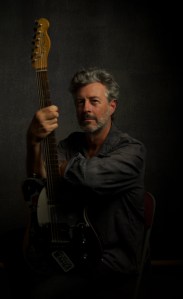
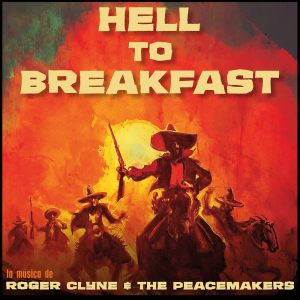
Following their departure from Mercury, Clyne and Refreshments drummer Paul”PH” Naffah continued playing Refreshments songs as well as writing new material under the name Roger Clyne and the Peacemakers. They have been fiercely independent with touring and recording since 1998, recording nine studio albums (including their latest record, 2026’s Hell to Breakfast) and various live records. The Indy Review caught up with Roger, fresh off a stint working at his father‘s cattle ranch, to talk about the new record and some of his musical history with The Refreshments and the Peacemakers.
**
Indy Review: Hey Roger. First of all, we appreciate you taking this time. Your new album, Hell to Breakfast is your first in nine years. Can you tell us the meaning behind that album title?
RC: I don’t exactly know, and therein is some of its charm. And even if I did know, I think I would leave it ambiguous because it’s kind of one of those things that when you leave it hanging, it just sounds really cool. I’ll tell you where I got it, it’s a saying that my dad and grandpa used to say back on the ranch, usually when mayhem is present. I remember once, not too long ago we were riding fence. And heifers are young female cows that you shouldn’t really have in with bulls before they are a certain age. Anyway, our bulls figured out where the heifers were and just decided to walk through the fence. So we came upon a hole in the fence and bull tracks going through them and my dad got off his horse and said “Well, there’s hell to breakfast!” And I thought to myself… that sounds really cool! And it also has another meaning; it means you’ve done an exhausted effort. So I put the mystery together with the cool old term.
Indy Review: The concept of a “band“ can mean different things at different points in time. Who are Roger Clyne and the Peacemakers in 2026? Is it different from when you started in 1998? Is it something to scratch an occasional musical itch? Or something you just have to do because you’re an artist and you need to?
RC: That’s a good question. The obvious thing would be personal. But we’ll skip over that. I think with any artistic endeavor, your processes can differ. You learn, you evolve. Goals change, you know? I think we might even have the same band as 17 years ago. We were a band that really wanted to make sure we had a career, and we worked very hard for that and tried to shoot very high. Now, you turn around and 30 years have gone by, and holy shit, we do have a career! We shot really high and here we are! And this is a wonderful place to be. We’re an American independent band, I don’t even know what our genre is, 30 years after our initial dream. I think we are just a grateful outfit.
Indy Review: I’m assuming the pandemic affected you guys just as it did most bands. How did you navigate that? And what’s been going on in the nine years since your last record?
RC: Yeah, it was difficult for everybody, so I’m not alone on that ship. So, leading an outfit that’s indie that has no backing, no corporate sponsorship or record label tour support or even a viable publishing company, to have the arena where your life weight happens, i.e. live music venues, close immediately and indefinitely was very, very disconcerting. We scrambled and did everything we could to keep our life on. It was really tough. And I think after that sprint was over with, the teamwork and the fortitude of the band itself, and also the assistance of our audience really made sure that when we needed to do a Zoom thing, a life thing where you put your hat out, they showed up. And it kept our bills paid. It felt like a sprint and took the air out of me in a lot of different ways. So at the end of it when everything started to “normalize”, I was out of breath as a leader, as an artist… I needed to take a seat on the bench to regroup. I needed to figure out my own “joie de vivre” again. Like, God I got into this because I love this, but I got through this because I had to. I needed to take account in what I really wanted to do. I remember it was a really good day for me when I sat down on the couch and reached for my guitar and started writing again. With the pandemic and the pandemic aftermath , I had not had the opportunity to do that for about three or four years. When I came back and I wrote “You Got Lightning”, which is the first song I wrote, I felt great. I loved it. I think that’s when I started again writing tunes and bringing them to the band. We kept in the studio, refining those songs and those performances until we finally had what became Hell to Breakfast.
Indy Review: That sounds like a lot of dedication between the band and your audience to get you through that, in the way that they did.
RC: Yeah, we’re very connected. It’s more a community than a fan base. We are very, very lucky to be so connected over decades with our community. The Peacemakers are a very lucky band.
Indy Review: You guys don’t really have a huge social media presence, do you?
RC: We’re trying but not much, because it’s honest, we’re old dudes, we didn’t grow up with that and it feels a little contrived. But we are trying to open up ourselves to have that presence without being actors. We don’t want to be influencers, we only want to be artists. The shenanigans that go on in an airport or on a tour bus are undeniably really funny. We can share those things and not have to try to be wise men, or too artsy on camera. Or fashion ain’t our thing either, man I like denim shirts and boots. That’s just who we are. It’s pretty simple, so we try to share our dailies, this is who we are, but we’re not trying to sell anything. I don’t have any hair products, but I have music. Show up, and we’ll have a good time!
Indy Review: Your music gives off vibes and themes of Mexico and the desert, mixed in with some really catchy pop components, from your days with the Refreshments up to now. How did all that come together to create this particular kind of musical stew?
RC: I guess it’s just who the band is, and who I am and where I came from. I’m a third generation Arizonan, son of a son of a rancher. And my mother was a school teacher, I loved skateboarding and smoking cloves… and the Sex Pistols and Lords of the New Church and the Violent Femmes… as much as I loved Patsy Cline and the Sons of the Pioneers, Marty Robbins and Johnny Cash. I went two years to a Catholic school, and it drove me crazy, two years to a public school. Many years of procrastinating the university system. I was in a rock ‘n’ roll band in college, it turned into a rock ‘n’ roll band out of college that turned into a wonderful independent vehicle for exploring time and space across the US with music…creating a community serving my own band and their families, and mine…it’s all just in there. I always wanted to write stories that were honest and meaningful for me. I never did chase trends. That’s probably why it’s consistent. Once we were in, we had the imperative to be honest, that’s the whole reason that PH and I walked away from The Refreshments. They wanted us to chase singles. That’s as cliché as it gets, right? The record company doesn’t hear a single… That’s why we broke up. Not having to do that in the Peacemakers was everything.
Indy Review: Can you talk a bit about your relationship with Mexican culture. That’s basically been in your music since day one.
RC: Well, the Clyne cattle ranch is 16 miles north of the Mexican border. Back before the border had all the ballyhoo, there weren’t really even checkpoints. We had lots of Mexicans help up on the ranch. I had my first swig of tequila behind the barn. I smoked my first cigarette, learned my first Mexican curse word. Their culture has always just been there for me. I’ve always respected and loved it. They’re a very close family culture. And I love the boisterous joy of the Mexican celebration. So I suppose, maybe that showed up in my music. One of my final semesters in college, I was a foreign exchange student in Ensenada, Mexico. I studied the mariachi culture and learned a bunch about that music. Its soul, its depth, its origin, its history. It just found its way in there. And you’ll find components of it in there even today on Hell to Breakfast.
Indy Review: Pop music has reared its head over the course of all your records. I’m really hearing it in “Fireflies”.
RC: Man I love a good pop song. I’m a sucker for it, like Fountains Of Wayne, you know those guys, make a pop song like nobody else. I still think The Cars are the best pop band that ever lived. Every once in a while, I get lucky and I think, damn you know what that is? That’s me loving The Cars! You know, trying to write something as cool as Cheap Trick, once in a while something stands out, so I like to keep it pop, record it pop and rock it out!
Indy Review: Some people may not know you’ve done some extracurricular songwriting for the television show King of the Hill and music for the Arizona Diamondbacks. Do you ever see yourself as a Danny Elfman type figure dipping your feet deeper into music for movies and television?
RC: Well, Elfman is a giant compared to my stature, I appreciate being mentioned in the same sentence. I was a big Oingo Boingo fan. I was thinking, what madness is this? It was so great, still is. You know, I think I like performing too much, to just write. Collabs are more fun for me now, because I’m not such a control freak about my music. I can actually sit down and open up the process with somebody else. But as far as sitting down and just writing…the idea of getting on the bus and not performing…that doesn’t sound like much fun.
Indy Review: What are some things that are inspiring your songwriting these days, as opposed to when you were first starting out?
RC: If you listen to my earlier work like Fizzy, Fuzzy, Big and Buzzy, it’s a very protagonist, selfish oriented, kind of thing. Mischievous adventure… Relatively harmless mischief. Now, the further I get to wearing down these moccasins on this long trail, I really think community, compassion and empathy are really important elements to bring to your time on earth. I try to amplify them through myself and share them through my music. I know a lot of the people in our Peacemaker community… we may not vote the same, but it doesn’t matter. We have to find the best part of ourselves to foster and to celebrate. We’re going to disagree on some stuff. But I try to amplify our inner divinity. And our integrity as humans, our best part. And I try to find it in me first, and if I think I get a glimpse of it, I share it. Even in dejected characters in tragic stories… sometimes when you find that redemption at the bottom of the well, it’s way better than if it’s just handed to you.
Indy Review: You’ve experienced the major label system in the 90s and also being completely independent. What would you say to any young people who have any aspirations of navigating the landscape of music in 2026?
RC: I would say it’s going to be a lot harder than you think it is. And you’d better love it, that should be the reason that you do it. Don’t do it for fame, don’t do it for riches. Don’t do it for likes, don’t try too hard to be an influencer. It’s going to be hard. Do it because you love it, a labor of love is a real thing. That will become the bedrock that you can stand on, and if you do it for any other reason, it will be hollow and meaningless. Not only just for you, but all those people to whom you issue your music and your art. It just has to come from the love of doing it. That’s the imperative.
**
Be sure to catch Roger Clyne and the Peacemakers on tour, and listen to their latest album Hell to Breakfast.


