David M Rangel / September 21, 2026 / Interview
“Wherever You Will Go” by The Calling is one of those songs that transcends genres and generations. Since its release in 2001 as the first single off the band’s debut record, Camino Palmero, the tune has experienced the kind of consistent ubiquity that few songs ever reach. It has been a constant, played in everything from supermarkets to movies while being enjoyed by fans young and old from every different style of musical background and taste. It fit well into the Zeitgeist of the late 90s to early 2000s with its anthemic pop-guitar sound which was also being done by bands like Matchbox Twenty, Third Eye Blind, The Goo Goo Dolls, et al.
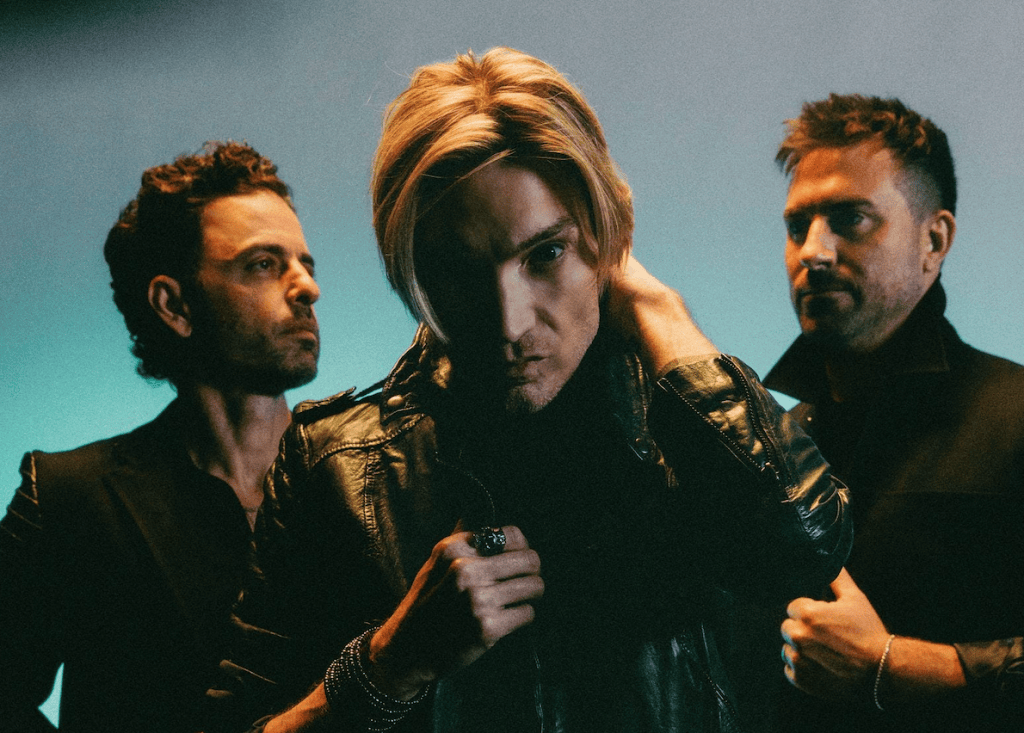
While they had other lesser known singles, they were never able to replicate the enormous success level of that song, before breaking up after their second album was released in 2004. Aside from a failed attempt to reunite in 2013, the band has been largely off the (general) public music radar until now. On September 25, 2026, the band will release Before The World Turns To Dust their first record in 22 years. I caught up with singer Alex Band to get some insight on the new record and what’s been going on in the 22 years since their last full length album.
**
Indy Review: First of all, great album, congrats. I hear a number of songs that could be singles. I can’t wait to share “Don’t You Cry” and some other ones with certain people when the record comes out.
Alex Band: Yeah, girls like that one. You’re actually one of the first people to hear that record. I’d say one of the first five people in the world to hear this album, other than family and friends. That’s cool that you’re hearing things.
Indy Review: Nice. I hear the classic sound of The Calling. You’ve retained and haven’t made a lot of changes to the anthemic pop sound of your earlier records. But this is obviously a whole different thing compared to when you were writing “Wherever You Will Go” as a teenager. How is it different for you writing songs now, well into adulthood in this current musical climate?
AB: Yeah, it’s so different. There is, of course, all the changes in the music business, but there’s also what I’ve been through. The first two The Calling records had this huge success, and I went to do a solo record and I had this hit with Santana. That was in 2005. I was going to do the solo record and then come back to The Calling’s third record. But that ended up coming out in five years because of drama and legal battles and things. That came out in 2011. When that came out, I had a song with The World Cup and everything was great, but I came down with Parkinson’s disease. So basically I’ve been through so many different wild things. I’ve been trying to put this new record out for 15 years. It’s taken that long to create the right guys to work with. This is the first time I’ve ever had players in the band who were actually “the band“. My guitar player Daniel (Damico) and my bass player Dom (Liberati), the two of them wrote this record with me, although there are some older pieces, things I wrote over all this stuff. So, between everything I’ve been through and the world being insane right now, the title of the record is almost like an inside joke. When you said it being a similar sound, that’s another reason it kept getting delayed. No label wanted it. I kept getting pushed by labels into “what’s current today, what’s happening today.” So nothing I did, other than what normally comes out of me, sounded real. It sounded contrived. I literally had to self fund everything for this record to come out and have it be the music I want it to be.
Indy Review: I understand that the band was always just you. There were people trying to pursue legal battles to get things they thought they were entitled to, but actually weren’t. So, after all that, how involved are Daniel and Dom in the creative process, now?
AB: Yes. This is very different. I own the band name, it’s my band, so to speak. But to do everything to get this record out, I needed help. I needed people I trusted. My good friend Daniel, my guitar player, he’s been with me since the second Calling record. We’ve known each other for over 22 years, so it was a no-brainer to bring him into this. To trust him. We had already written songs together and I knew that was great. Him and I brought in Dom, the bass player. He’s a solo artist. He does well with pop stuff and he kind of brought in a different flavor. It’s all worked out.
Indy Review: So on that note, does a multi-platinum act still have average, everyday band practices? Do those kinds of get-togethers go on anymore or is there something different when you hit a certain level?
AB: Oh yeah, of course. I mean, it was different, in that there were pieces of songs, and full songs that I had written. I had basically written an entire new Calling record in the 2010s. So there were some parts from those that ended up on this record. But for the most part, I just brought them in and we started writing. The first song we wrote was the single, “Dust”. So, it was basically that simple. Of course we rehearse and do all that stuff. It’s more of a “band” than I’ve ever experienced in my career.
Indy Review: You’ve lived that major label rock ‘n’ roll dream. But now, you’re navigating this entirely new world within the music industry. For younger readers who may have not been around for that pre-Internet music world, what are some of the differences you’re experiencing now, being independent?
AB: The two worlds are complete, polar opposites. As The Calling, I was signed in 1996. There was no language in that contract that had anything to do with streams. That didn’t exist. Basically, that deal was a traditional label deal where they spent a crap ton of money to push an artist. And every penny they spent, I had to pay back with the one dollar out of every $10 sale of an album, that I made. That’s why artists never recoup. I sold 10 million records and I only just recouped a couple years ago. That was a world where you had no control over the money being spent. It was great they were spending money on you, but that was not a world where you could say “wait, why don’t we spend money on this, rather than that”. Also, you had a gatekeeper. Your A&R (Artist and Repertoire) guy. If he didn’t think you had the right songs… I was signed at 15 and it took four years… with the same songs, all the songs were sitting there… for them to even think “OK, let’s let you make a record.” And it took another year to put it out. So, I’ve been in these gatekeeper mode situations, multiple times in my career , and they suck. They suck years out of your life and there’s no fucking point to it.
Now, this is a completely different world. Number one, I get to control everything. I get to do what I want to do, but of course I’m putting way more of myself and my finances and everything on the line. But I did that anyway. “Wherever You Will Go” took almost a year to break in radio. And near the end of that push, the label was going to give up. It just wouldn’t break the top 10, and I literally drained my bank account to push it a little longer, and then it did break. So, I’m used to putting everything I have on the line. But now being in control of it, it’s a hell of a lot better. Now the label works for me and that’s the huge difference with an indie label. It’s going through Virgin (records) as the distributor, but that’s really it. I’m lucky to have Virgin helping me with radio. But I have to pay them to do it, they aren’t doing it for free. But the massive difference between back in the day and now, is that there is zero money to be made with the selling or streaming of your music. 40 million streams is about $40,000. You used to be able to sell a few million singles and make back the money that it cost to make the record and put it out. Now, you need tens of millions of streams to get anywhere near the money of even touching that cost. Now you have to find totally different avenues like touring and merch for income. But true fans, they buy merch and actual CDs. That does help, but it’s not a lot. In the music business now, you work 10 times harder than before, and you are getting 10 times less.
Indy Review: You haven’t had a record out in 22 years. But I’ve seen your numbers and you still have super fans that have been around all this time. What do you think has kept them around?
AB: I would say personal connection. Even though I wasn’t able to do my job for about eight years, I continually toured internationally. I’ve continually gone to see the fans, even if it was a money loss. I continued to do that and I think that massively changed things. That was hard to do before social media. So obviously, it’s a lot easier to connect with people on social media. But, also it’s the music. People still like anthemic, soul-lifting type songs. That’s just what comes out of me and how I’ve always written and I think people have hung onto that. I’m blown away by the fact that I’ve been able to continue doing what I do, after releasing only two albums. And that’s the fans. I don’t really know what the secret sauce is there. But I think for me, it’s that personal connection. When I go to a certain country, I find out what those particular fans want to hear. I tailor our set list to that. That makes for a great show.
Indy Review: You grew up in Hollywood on movie sets, and your dad made movies. Is he still doing that?
AB: Yeah, he still makes movies every freaking day. He’s made over 450. He’s the king of the B movies, basically. So when you used to go to Blockbuster and Hollywood video stores, every movie on those shelves that were next to the movies you had actually heard of, those movies that you hadn’t heard of…those were his. He had a lot of cult classics. In the 70s his company released Halloween, Texas Chainsaw Massacre, and then he started producing and directing things himself. He did Reanimator. And yeah, I grew up in Hollywood. It was a very strange childhood. Like at three years old, my early memories are of naked chicks. And monsters, and that was all normal. Lots of bizarre things growing up in that, and it was interesting. My dad‘s original company was called Meda, after my mom. Then that turned into Media, which ended up putting out Halloween and those things. And then through the 80s and early 90s it became Empire. And the company has been called Full Moon for 25 years, now.
Indy Review: Let’s talk about some of your experiences touring down in South America. Some of that has been crazy.
AB: Yeah, actually, The Calling holds the record for touring in Brazil, going to the most different places. We’ll go down for a month and tour 16 different cities, really poverty stricken places. There is no driving from city to city. That’s a death wish. I’ve been shot at, I’ve had windows broken in as we were driving, I was held hostage before. It’s a dangerous place to go, but I’ve been there so many times now it’s like a second home. I know what to expect. And the fans down there have been extremely awesome. And we have that sort of following in the Philippines and other European countries. But Brazil is definitely the biggest, and it’s been an amazing consistency with the fans. It’s crazy, you go down there and you feel like a rockstar. And then you come home and no one gives a shit.
Indy Review: It’s kind of miraculous that you made it to this point in your career. You’ve had a lot of tragedies and obstacles in your way. Can you speak about what’s been going on in the last 22 years?
AB: Sure. So, it’s not that I decided to not put out Calling records. I’ve been in an insanely long bummer situation that started in 2011 when that solo record came out. I was diagnosed with Parkinson’s disease and it hit me early onset, same age as Michael J. Fox. I was completely taken down. After a week of having it, I was in a wheelchair. I couldn’t move. Every part of my body was changing, I had tremors everywhere. That was the end of everything. Every single person who worked with me in the music business, disappeared. Everyone I knew disappeared. Money disappeared. I put everything I had into trying to cure myself. And everybody knows that disease isn’t curable. But luckily, there were a lot of new medications that had just come out. As the years went on, I was starting to get better, but it was still a death sentence.
You are going to die eventually from Parkinson’s. So I went to play a show in Michigan, even though I wasn’t really medically cleared to do that. It was a great show. But that night, I got jumped. Some assholes that were in the audience saw that I had some cash and they pulled me into a van and smashed my face with a police baton, like a metal bat. They drove me out to the middle of nowhere, a train station to kill me. To just leave me there. After they took all my stuff, my money and jewelry. It’s a long story about how, but I basically talked my way out of it. They kicked me out of the van and I landed on a railroad track and fractured my tailbone. But adrenaline kicked in and I was able to walk back to the town I had just played in. The town was amazing, the guys that jumped me were not from that town. And of course, there were lots of people that said “you made this up“. It’s like, fuck off.
It was a mental nightmare that took years to get over the horror of. I didn’t have teeth for five years. I finally got teeth in 2019. And around that same time, I went back to my neurologist. And multiple neurologists started admitting that they might have fucked up with the diagnosis. They said I might have “Parkinsonism” which is a syndrome like Parkinson’s, but it’s not the actual disease. it could actually go away. That was a new lease on life for me. And then I was going to start to do The Calling, and then Covid hit and we all got screwed on that. It took me three or four years after that to get everything back to this point. But yeah, definitely had a lot of crazy stuff happen.
Indy Review: What are some of the things that are making Alex happy these days?
AB: Well, before Parkinson’s, I was flying helicopters and doing other kinds of crazy shit. Now, that’s all gone. Now I’m just really enjoying being a normal person and all the little things in life. Music influence-wise, I was born singing and making up songs. I was a big fan of the opera growing up. And Bon Jovi, Led Zeppelin, Pearl Jam … those are all bands I loved growing up. I would say these days, U2, Coldplay and bands like that are bands I’ve listened to for a long time. But there are other artists I like that are more like new-ish. Muse is really amazing… And so on and so forth.
Indy Review: So, with this record, are you guys back doing music on a permanent basis again? It doesn’t sound like it’s just a casual thing to check in with the fans.
AB: Yeah, we’re back 1000%. This is the first time in a long time I’ve been able to put a new record out, and there are many new records to follow. I’ve always wanted to do things just like a normal band, putting out a record, touring the world, and then putting out another one. We opened for Cheap Trick the other night. This band made 10 albums in the first 10 years of being together. And it’s like, that’s how it should be. But because of labels, gatekeepers and drama and stuff, multiple years had gone by before I could release anything. But that’s now all gone. We are back to continue, for sure. But you know, all of that is obviously dependent on whether there is success in this. I’m not looking for any sort of success like I’ve had… I don’t think we will ever top being number one song of the decade and all these absurd things. I’m just looking to make fans happy and to just be able to continue doing what I do, and make enough money from that to continue to do it.
Indy Review: So finally, I don’t really see this in print nor do I hear it in your music. But I hear people talk about The Calling being a Christian band or at least having religious intentions. Where does that stand?
AB: No, we’re not a Christian band. I’m half Jewish. Because I was born ready to be a musician, everyone always thought it was my “calling”. I actually called the band something else until the moment we made the first record and just decided to call the band The Calling. So, there’s no religious connotation. With that said, I’m not anti-anything. I’m not against that, no. When I was in school, we studied every religion. I read every sort of book. So, I’m open to everything, but for me… I’m really into science and astrophysics. But the songs, they can be taken all different kinds of ways. If people feel it’s religious, that’s great. You know, a religious experience or an emotional connection to a song is great. We toured with Lifehouse, which is a Christian band. And we have a similar vibe, so I think that might be where people might get that idea. I’m not sure.
Indy Review: Well, I appreciate your time. Do you have any final thoughts that you would like people to know?
AB: Yeah, thank you so much. The album is out September 25th. I hope people can support it. A lot of blood sweat and tears went into it. I’d like to think the record is a whole experience and not just a bunch of garbage with one or two good songs. I hope people can take a moment to listen to the record.
**
The Calling‘s Before the World Turns to Dust is out everywhere September 25th. Listen to the pre-released tracks here:


2 Comments